The Truth About the A8G Oled: Pros, Cons, and Verdict
The landscape of premium home entertainment has shifted dramatically over the last decade, transitioning from the raw brightness wars of traditional LED-LCD panels to the nuanced, deep-contrast elegance of Organic Light Emitting Diode (OLED) technology. Among the titans of this industry, few names carry as much weight as Sony. Known for their meticulous attention to color accuracy and motion processing, Sony’s entry into the OLED market was met with high expectations. The A8G OLED represents a significant milestone in this journey, positioned as a high-end display designed for cinephiles who value picture purity over flashy gimmicks. While the television market moves quickly, the fundamentals of what makes the A8G a compelling choice—its self-emissive pixels, sophisticated image processing, and minimalist aesthetic—remain deeply relevant for those seeking a theater-like experience at home.
In this comprehensive analysis, we explore the intricate details of the A8G OLED. We look past the marketing jargon to understand how this panel behaves in real-world living rooms, how it handles the challenges of modern HDR content, and where it sits in the competitive hierarchy of modern displays. Whether you are a dedicated film buff looking for the perfect black levels or a casual viewer wondering if the OLED premium is worth the investment, this guide provides the technical and practical insights necessary to make an informed decision.
Understanding the OLED Advantage
To appreciate the A8G, one must first understand the underlying technology that separates it from the vast majority of televisions on the market. Most TVs use a backlight (usually LEDs) that shines through a liquid crystal layer to create an image. OLED is fundamentally different. Every single pixel in an OLED panel is its own light source. When a pixel needs to show black, it simply turns off completely. This results in "infinite" contrast, where a bright star can sit next to a pitch-black sky without any of the "blooming" or "halos" that plague even the best local-dimming LED TVs.
Sony takes this foundation and applies its proprietary X1 Extreme processor. While the panel itself is sourced from LG Display (as is the case with almost all OLEDs), the "brain" of the TV is pure Sony. This processor is responsible for upscaling lower-resolution content, managing motion during fast-paced sports, and mapping HDR colors to ensure they don't look "clipped" or oversaturated. The A8G is not just a screen; it is a highly tuned instrument for visual reproduction.
Detailed Product Analysis: Performance in Practice
Picture Quality and Contrast
The primary reason anyone considers the A8G is for its black levels. In a dark room, the A8G is nothing short of transformative. Because it can achieve absolute black, the perceived depth of the image is far greater than what is possible on a standard screen. Shadows are not just dark gray; they are voids, allowing fine details in dark suits, moody hallways, or space scenes to pop with startling realism. This is particularly evident when watching 4K Blu-rays or high-bitrate streaming content where the cinematographer has utilized low-key lighting.
Color reproduction on the A8G follows Sony’s "Triluminos" philosophy. Instead of leaning toward the neon, hyper-saturated look common in some contemporary displays, Sony aims for accuracy. Out of the box, the Cinema and Custom modes provide a picture that is remarkably close to what a Hollywood colorist sees on their master monitor. Skintones are handled with a delicate touch, avoiding the reddish or orange tints that can sometimes occur when HDR is pushed too far. The subtle gradations in a sunset or the texture of a concrete wall are preserved through the X-Reality PRO upscaling engine, which does an excellent job of making 1080p content look nearly like native 4K.
High Dynamic Range (HDR) Performance
The A8G supports HDR10, HLG, and Dolby Vision. While it does not reach the searing 1000+ nit brightness levels of top-tier LED TVs, its ability to place highlights against perfect blacks makes for an impactful HDR experience. A flickering candle in a dark room or the reflection of sun off water has a "glint" that feels authentic. However, it is important to note that OLEDs are best suited for controlled lighting environments. In a sun-drenched living room with multiple windows, the A8G may struggle to overcome the ambient glare compared to a high-brightness LCD model. For the dedicated home theater, however, its HDR mapping is superb, ensuring that details in the brightest parts of the image—like clouds or snow—are not lost to "white-out" effects.
Motion and Gaming
Sony is widely regarded as the industry leader in motion handling. The A8G utilizes Motionflow XR technology, which allows for smooth transitions in fast-moving scenes without the dreaded "soap opera effect" (unless you explicitly turn it up). For sports fans, this means the flight of a football or the movement of a hockey puck remains crisp. For movie purists, it means the 24fps cadence of film is maintained without jarring judder during camera pans.
Discover deals on TVs & Home Theater — updated daily.
Shop Amazon →From a gaming perspective, the A8G offers a decent experience, though it lacks some of the more modern features found in newer "gaming-centric" displays like Variable Refresh Rate (VRR) or 4K/120Hz inputs. Input lag is respectable enough for most single-player adventures and casual multiplayer, but competitive gamers might find it a step behind the latest specialized hardware. That said, playing a visually rich game like a modern RPG on an OLED is a sight to behold, as the contrast adds a layer of immersion that is difficult for other technologies to replicate.
Sound: Acoustic Surface Audio
One of the most unique features of the A8G is Sony’s Acoustic Surface Audio. Instead of traditional speakers buried in the bottom or rear of the chassis, the screen itself is the speaker. Actuators located behind the panel vibrate the glass to produce sound. The result is that audio appears to come directly from the mouths of the characters on screen or from the location of an explosion. This creates a much wider soundstage than typical internal TV speakers and offers surprisingly clear dialogue. While it won't replace a dedicated surround sound system or a high-end soundbar for deep bass, it is arguably the best-sounding integrated audio solution in its class.
Pros and Cons
- Unmatched Contrast: The ability to turn off pixels individually allows for perfect black levels and infinite contrast, providing incredible image depth.
- Superior Upscaling: The X1 Extreme processor does a masterful job of making older DVDs and HD broadcasts look sharp and modern on the 4K panel.
- Color Accuracy: Sony’s factory calibration is excellent, offering natural, lifelike colors that respect the creator's original intent.
- Acoustic Surface Audio: The innovative sound-from-screen technology provides clear dialogue and a cohesive audio-visual experience without external speakers.
- Elegant Design: With a super-slim profile and a versatile stand that can be raised to accommodate a soundbar, it looks like a piece of art on any media console.
- Wide Viewing Angles: Unlike most LED TVs, the image remains consistent in color and contrast even when viewed from a sharp angle, making it great for wide seating arrangements.
- Peak Brightness: Like most OLEDs of its generation, it cannot get as bright as premium LED/QLED sets, which may be a drawback in very bright rooms.
- Risk of Permanent Image Retention: Static elements like news tickers or HUDs in video games can potentially cause "burn-in" over long periods of time, though this is rare with varied use.
- Lack of HDMI 2.1: The absence of high-bandwidth ports means no support for 4K at 120fps or VRR, which may deter owners of the latest gaming consoles.
- Android TV Speed: While the operating system is feature-rich, the interface can occasionally feel sluggish compared to newer, more powerful smart TV implementations.
Technical Comparison
When evaluating the A8G, it is helpful to see how it compares against the two most common alternative choices: a high-end LED TV and a newer-generation OLED. The following table highlights the key differences in technology and performance priorities.
| Feature | Sony A8G OLED | Premium LED (LCD) | Next-Gen…
Your Room LightingThe first question to ask is: where will this TV live? If you have a dedicated basement theater or a living room with blackout curtains, the A8G will be the star of the show. Its lack of a traditional backlight means there is no light "bleeding" into the black bars of a movie, creating a seamless integration with the darkness of the room. However, if your TV is positioned directly opposite a large south-facing window, the glass panel can be quite reflective, and the peak brightness might not be enough to overcome the sun’s glare during daytime viewing. 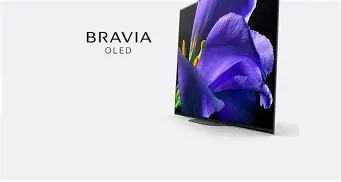
What Do You Watch?If your primary diet consists of 4K HDR movies, "prestige" TV dramas, and atmospheric cinematic experiences, the A8G is tailored for you. The way it handles shadow detail and subtle color shifts is specifically designed to mimic the look of professional grade monitors. On the other hand, if you primarily watch cable news or sports with a persistent "scoreboard" on the screen for eight hours a day, you might want to consider a high-end LED. While OLED burn-in is much less of an issue than it was in the past, static bright elements are the one true enemy of organic pixels. The Gaming FactorWe are currently in a transition period for gaming. The latest consoles are capable of pushing high frame rates and variable sync. If you are a hardcore gamer who prioritizes the lowest possible input lag and the smoothest possible frame rates for competitive play, the A8G might feel slightly dated. However, if you play immersive, story-driven games like The Witcher or God of War, the visual fidelity offered by OLED contrast will likely outweigh the need for 120Hz support for most players. Smart Features and EcosystemThe A8G runs on the Android TV platform. This is a massive "pro" for those who use Google Home or enjoy having access to the vast library of the Google Play Store. It has Chromecast built-in, allowing you to easily beam content from your phone. However, if you are heavily invested in the Apple ecosystem, you may need an external Apple TV box to get the best integration, as older versions of Android TV are sometimes slower to receive updates for features like AirPlay 2 compared to newer Sony models. Looking for the best TVs & Home Theater deals on Amazon? Browse Now →Installation and Setup TipsTo get the most out of an A8G, proper setup is crucial. Because the panel is incredibly thin—thinner than most smartphones at its edges—handling it requires extreme care. Always have two people when unboxing and mounting. For the best picture quality, avoid the "Vivid" or "Standard" picture modes often set by default. These modes tend to crank up the brightness and blue tints to look good in a bright retail store, but they crush detail and look unnatural in a home setting. Switching to "Cinema" or "Custom" will immediately provide a more accurate color temperature. Additionally, ensure that your HDMI cables are "Premium High Speed" certified to handle the bandwidth required for 4K HDR and Dolby Vision at 60fps. If you are using the included stand, Sony provides two positions. The lower position keeps the TV almost flush with the furniture for a clean, floating look. The higher position raises the panel by about two inches, providing just enough clearance for a slim soundbar to sit underneath without blocking the bottom of the screen or the infrared receiver. The Maintenance of an OLEDOwning an OLED like the A8G comes with a small responsibility for panel health. Sony has built-in several "Screen Care" features to mitigate the risk of image retention. One is "Pixel Shift," which subtly moves the entire image by one or two pixels periodically—unnoticeable to the eye but helpful for keeping pixels from getting "stuck" on a specific color. There is also an "Automatic Pixel Refresher" that runs when the TV is turned off after long periods of use. It is vital to never unplug the TV from the wall immediately after turning it off with the remote; it needs that standby power to perform its background maintenance cycles. Natural ConclusionThe Sony A8G OLED remains a testament to the idea that resolution is only one small part of the picture quality equation. While 4K is the standard, it is the quality of those pixels—the depth of the blacks, the accuracy of the colors, and the smoothness of the motion—that defines a premium viewing experience. Sony has taken a world-class OLED panel and applied its legendary processing power to create a display that feels distinctly cinematic. It is not the perfect TV for everyone. Those with extremely bright rooms or those who demand the cutting-edge specs of high-refresh-rate gaming will find better matches elsewhere. However, for the viewer who considers a Friday night movie an event, who appreciates the silent parts of a film as much as the loud ones, and who wants their TV to look as good off as it does on, the A8G is a formidable choice. It prioritizes the "Truth" in image reproduction, staying faithful to the source material in a way that few other televisions can match. Even as newer models introduce higher brightness or more complex AI features, the fundamental excellence of the A8G’s contrast and color ensures it remains a high watermark for home entertainment. Find the Best TVs & Home Theater Products TodayExplore top-rated options handpicked for quality and value. Shop on Amazon →
As an Amazon Associate I earn from qualifying purchases.
|
|---|