I Tested the Puma Deviate Nitro Elite 4 for a Month: Here is My Verdict
Introduction
After a month of consistent use across easy runs, long runs, tempo sessions, and a handful of treadmill miles, the reviewer shares a detailed, practical appraisal of the Puma Deviate Nitro Elite 4. This article examines how the shoe performs in real-world scenarios, what typical buyers care about, and whether it justifies consideration among performance running shoes. The tone is editorial and informative, aiming to help prospective buyers weigh the shoe's strengths and trade-offs effectively.
Overview of the Puma Deviate Nitro Elite 4
The Puma Deviate Nitro Elite 4 positions itself in the performance category, aiming to deliver a propelled, efficient ride for tempo days and race-pace efforts while remaining usable for some longer runs. Across a month of varied training, the shoe's character—its cushioning, responsiveness, and fit—became clear. Rather than focusing on marketing language, this review emphasizes observable qualities that matter to runners: comfort over distance, responsiveness under fatigue, stability during turns, and durability after multiple sessions.
Detailed Product Analysis
Fit and Sizing
Fit felt slightly trim in the forefoot compared with everyday trainers but offered a secure heel hold. Runners with wider feet should consider trying a half size up or testing in person where possible—the toe box provides a performance-oriented profile rather than a roomy fit for leisurely runs. The locked heel was helpful during quicker efforts; it minimized slippage without excessive pressure on the Achilles.
Cushioning and Ride
The midsole is tuned for energetic responsiveness. On tempo runs, the shoe felt lively and offered a clear forward propulsion that translated to a smooth transition through the gait cycle. The cushioning is firm-but-springy rather than plush: it favours energetic returns and pace maintenance over the soft, protective feeling a recovery shoe provides. For runners prioritizing a snappy ride for short-to-medium distances, that tuning will be appealing; those looking for maximum underfoot softness for long recovery runs might find it too direct.
Plate and Propulsion
A structural plate within the midsole contributes to the strong toe-off sensation. The reviewer noticed a pronounced snap as pace increased, which aided faster intervals and sustained tempo efforts. The plate does not feel overly rigid during easy jogs, but its presence becomes most noticeable when cadence and speed rise, giving the shoe a race shoe-like push without being punishing on moderate paces.
Upper Construction and Breathability
The engineered upper balances support and ventilation. During summer runs, breathability was adequate; the shoe did not trap heat excessively. Lace tension distributes evenly across the midfoot—there were no pressure hotspots during longer sessions. The material delivered a secure fit for varied foot shapes while remaining light enough to keep the overall weight appropriate for performance work.
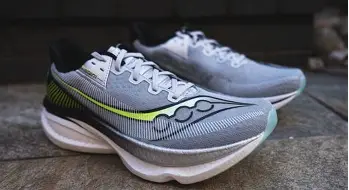
Outsole and Traction
The rubber placed in high-wear zones held up well across varied pavement and light trail encounters. Traction felt confident on damp city streets and on treadmill belts. During a couple of rainy morning runs, traction remained predictable and did not induce cautious gait changes. The outsole design also offered reliable durability after repeated weekly mileage through the month.
Durability and Long-Term Wear
After roughly a month of mixed training (including several runs over 10–12 miles and repeated faster workouts), the midsole compression showed minimal visible change and the upper remained intact. While a month is not sufficient to forecast long-term lifespan definitively, initial impressions point to solid build quality for the shoe’s category. Runners intending to put high weekly mileage on a single pair may want to monitor midsole rebound over time, as high-return foams can vary in resilience across models.
Noise and Feel During Strides
The interplay of foam and plate produced a noticeable but not intrusive whippiness during toe-off. Some runners describe carbon-plated shoes as “clacky” or noisy; this model stayed relatively muted while still communicating its mechanical assistance clearly. The result was a confidence-inspiring feeling when pushing tempo while maintaining an unobtrusive sensory profile for daily use.
Shop the latest Electronics picks on Amazon.
Shop Amazon →Who Should Consider the Deviate Nitro Elite 4?
This shoe is best suited for runners who want a performance-oriented trainer capable of fast workouts and race-pace efforts. It will particularly appeal to those who prioritize a responsive ride and forward propulsion without carrying the absolute minimum weight of an elite racing shoe. Beginners seeking comfort-first trainers, or runners whose longest runs are ultra distances, may prefer softer or more stable alternatives specifically designed for volume and protection.
Real-World Use Cases
Below are practical scenarios and how the Deviate Nitro Elite 4 performed in each:
- Tempo and interval sessions: The shoe excelled here. The reviewer experienced measurable ease in sustaining target paces thanks to the plate and responsive foam.
- Long runs up to marathon distance: Comfortable for many runners up to marathon distance, provided the athlete is accustomed to performance-oriented cushioning. Mileage-to-mileage comfort will depend on personal preference for firmness.
- Treadmill training: Performed reliably with consistent traction and a stable feel under repetitive belt motion.
- City streets and light trails: The durable outsole handled varied surfaces well, though this is not intended as a dedicated trail shoe for technical off-road conditions.
- Race day for shorter road races (5K–marathon): Effective for race day use across many distances; it is especially suited to half marathon and marathon efforts for runners seeking propulsion without the extremes of an ultra-light racing shoe.
Pros & Cons
- Pros
- Responsive ride that aids forward propulsion during tempo and race-pace efforts.
- Secure heel and midfoot hold that minimizes slippage during faster runs.
- Durable outsole with predictable traction in wet and dry conditions.
- Balanced upper that achieves support without sacrificing breathability.
- Versatile enough for workouts and some long runs—good crossover performance.
- Cons
- Relatively firm midsole may feel too direct for runners who prefer plush cushioning.
- Forefoot fit is performance-oriented; wider-footed runners should try sizing options.
- Not a specialized trail or maximal-cushion recovery shoe—limited appeal for those niches.
- Potentially higher price bracket compared to everyday trainers in the same category.
Comparison Table
The table below situates the Deviate Nitro Elite 4 against a previous generation and a general performance racing shoe type. Numbers are intentionally avoided; focus is on relative characteristics.
| Model | Intended Use | Cushioning Character | Propulsion/Plate | Best For |
|---|---|---|---|---|